magenet

Showing posts with label Auctions. Show all posts

Tuesday, October 18, 2016

By any chance, who knows why software errors are called "Bugs"?

The first electric computers were made mostly of valves. These used to get very hot during operations of the computer so the huge electronic assembly became a very warm and cozy place for? ;)


It is said that when a renowned and seminal computer scientist "Grace Hopper" was working on a project in 1950's, one of her computer machines (a massive part-electrical part-mechanical) broke down because there was an actual bug (insect) in one of the circuits.

Women in tech history: Grace Hopper – Admiral, programmer, and rebel.

The insects caused the valves breaks, so the entire computer didn't work as expected. So engineers had to search the bug. That explains :) There's a good and interesting article about Mrs Hopper who was an incredible and pioneer woman in the computer science history:

Women in tech history: Grace Hopper – Admiral, programmer, and rebel

In 70s computers weren't so friendly

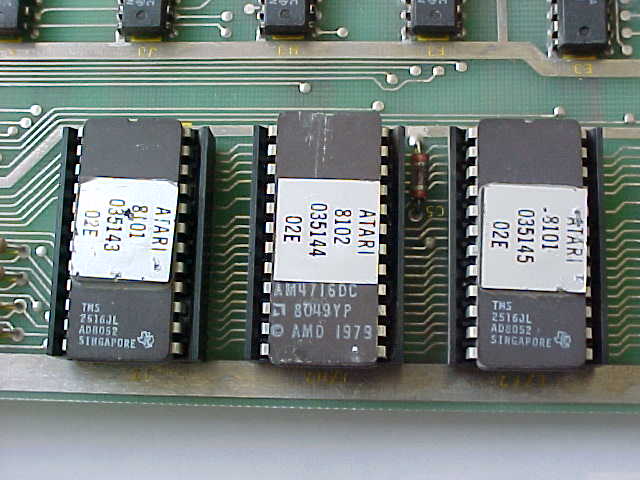
In the seventies computers weren't so friendly like nowadays they are. The software was essential and not as smart as now we expect to be. Programmers had to know everything about the computer: CPU, RAM, ROM, input and output ports, everything. There weren't high level programming languages like Python, Javascript or Delphi or others, but the most of the times they had to write programs in binary format, burn them on a EPROM, plug it on an IC socket on the motherboard and hope that everything was correct.
EPROMs plugged into their sockets on a motherboard.

The debug process was performed on paper instead during run-time. And Actually this approach saved a lot of time, and it should like that even nowadays with high levels programming languages.

A very good example of a hand written Assembly program.

The procedure of erasing and burning an EPROM was long, and sometimes tricky: some old EEPROMs had a tiny circular transparent window; right under that window there was the memory chip, and when you had to erase it, you needed to expose that to an UV light for a specific amount of time.


Old EPROM UV eraser.
We can understand that the development of a computer was affordable and possible mostly for professionals and big companies. Moreover the ICs and electronic components were very expensive, so it was really difficult to "experiment" with the hardware. Nowadays a microcontroller costs around 1$, so if a developer burns it who cares, but in the seventies a microprocessor had a price of hundreds of dollars!

Actually this wasn't really negative because engineers and programmers were pushed to do things once and right! And I personally think that this is the main reason why nowadays the software is alway full of bugs.

Monday, October 10, 2016

The replica projects: Mimeo and Replica 1

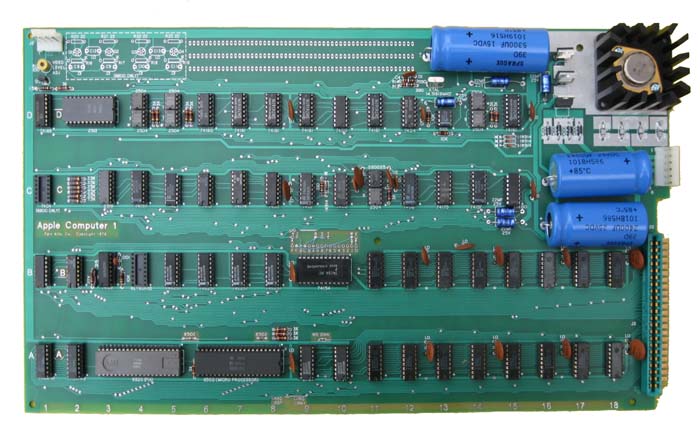
The first Apple-1 Replica project that I have found is the Mimeo project. This is a reproduction of a real Apple-1 board, where you have to solder real vintage parts. The result is a real clone of an Apple-1.
Mimeo Apple-1 Replica board
Mimeo 1 assembled board

This is a very cool project, and even you need an electronic background to assemble and test it, at the end you have a real clone almost identical to the original hardware.

The second Apple-1 replica project is the Replica 1, a bit different from the previous project in the use of the components.

Apple-1 Replica1 board
The Replica 1 board

This is very interesting because here we have almost the same main components used in the original board such as the Motorola 6502, logic ports, Memory chips etc. But, for specific tasks like the I/O, handled by the PIA or the video terminal, we have a Parallax Propeller that does everything. I could call this not a real clone but a hybrid clone.

Now, there isn't really the right choice between these projects. I was interested in both of them, but at the end the challenge of building something is to start from scratch. I thought a third way. Since I have some experience in programming microcontrollers, I started to check if I could have created an emulator for a development board like Arduino. This choice leaves most of the work to the software coding, but you have also the chance to easily update the firmware without changing the hardware.

I didn't take in consideration the use of FPGA chips because this technology even if it's more suited for replicating a real hardware, it's very hard to configure, set and program.

So the work started with the first important question: How does a real Apple-1 work?

Saturday, October 8, 2016

What is an Apple-1

At first I thought to find an Apple-1 on eBay and build a wooden case around it, but soon I realized that this was a really stupid idea :) I didn't know that much about the Apple-1, I knew only that it was a super rare computer and more or less the architecture of the hardware.


Apple-1 complete system signed by its designer Mr.Wozniak.

I did a deep research and I was shocked when I read that the price for a working unit, if you are lucky to find one,  is around thousands or hundred thousand of dollars!

Apple-1 Auction article

Apple-1 Auction article

Apple-1 auctions.

I found an article about one auction where this computer was sold for 815,000$! Prices are all the same more or less. So I abandoned the idea of buy one of course, but I still wanted one in my hands. Since it's difficult to find one unit, in working conditions and cheap, I thought that maybe there are kits or replicas somewhere. I know that there are emulation projects for arcade machines, retro consoles and retro computers; so maybe my hopes are not dead.

There are a couple of "Replica" projects that are very popular. These projects replicate the real hardware using real vintage components together with modern ones that substitute old components hard to find.

Other than hardware projects there are several software emulators, one of those is the incredibly popular "MAME".

Mame 0.177: Apple-1 computer driver listed.
I think it's cool to have real hardware running instead of a PC with an emulator, the look and feel of an old keyboard, a CRT monitor and an electronic board in front of you can't be compared to a modern PC that emulates a vintage one.

So my choice was to take a look at the "Replica" projects...